jueves, 27 de marzo de 2014

LAS ENSEÑANZAS POLÍTICAS DEL BUDA

LAS ENSEÑANZAS POLÍTICAS DEL BUDA

buddha
Según la tradición budista, Siddharta Gautama, después conocido como Buda, nació en el año 543 a.C. en el territorio hoy conocido como Nepal. Siddharta dedicó gran parte de su vida a la búsqueda del Nirvana, un estado mental de armonía en el que el sufrimiento deja de existir. No fue sino hasta el momento en el que Siddharta alcanzó el Nirvana que éste se convirtió en Buda, palabra que literalmente significa “el Iluminado”.
Previo a su Iluminación, Siddharta Gautama vivió en los extremos. Los primeros años de su vida estuvieron marcados por la opulencia  extrema. El padre de Siddharta, gobernante de su clan, buscó evitar que su hijo entrara en contacto con el sufrimiento y lo cubrió de riquezas. Le construyó palacios en los que Siddharta pudiera siempre mantenerse entretenido y contento: puso músicos, artistas, y mujeres a su disposición; lo rodeó de una fantasía en la que la vejez, la enfermedad, y la muerte, no tuvieran lugar .
Cuando Siddharta se percató de la condición humana y la fantasía construida se derrumbó, éste decidió renunciar a su vida opulenta y comenzó a busca la Iluminación en el otro extremo. Durante años, busco cobijo en las enseñanzas de maestros, eruditos, y sabios, y se movió en una cultura que exaltaba la renuncia y la escasez. Siddharta Gautama ayunaba por semanas y pasaba días sin dormir o tomar agua. Llegó a tal extremo, que se encontraba totalmente decrepito y en riesgo de morir.
Fue entonces que Gautama se dio cuenta que la Iluminación no se encontraba en los extremos, sino en “el camino medio”. Había experimentado ambos lados de la balanza, la abundancia y la escasez; y en ninguno de éstos había logrado encontrar el Nirvana, la paz y la armonía interior que tanto ansiaba.
Siddharta comparaba esta revelación con las cuerdas de un sitar, similar a una guitarra. Cuando las cuerdas están demasiado flojas no emiten ningún sonido, y cuando están demasiado tensas se rompen. Es sólo cuando están en el medio, ni demasiado tensas ni demasiado flojas, que el sitar puede generar música.
Toda esta enseñanza puede ser aplicada, no solo a nivel individual por alguien que busca la iluminación, sino también a nivel político por alguien que quiere perfeccionar nuestra sociedad. De la misma forma en la que Siddharta Gautama pasó su juventud en los extremos, la política ha sido tradicionalmente conceptualizada en dos polos: izquierda y derecha.
Muchos incluso argumentan, que esta división entre izquierda y derecha es lo que esta manteniendo a nuestro desarrollo político estancado. Mientras que hombres y mujeres de ambos lados de la balanza se dedican a argumentar desde sus extremos las mismas cosas una y otra vez, lo que el país más desea es moverse hacia delante. Nuestra política contemporánea esta basada en la confrontación y la polarización ideológica, cuando en realidad debería de basarse en la integración de los grandes temas que nos unen.
Es interesante también darnos cuenta de cómo, al abandonar los polos y adoptar el camino medio, la dicotomía de los polos desaparece. En vez de vivir en un mundo de opuestos alcanzamos un punto mas alto: el espacio de la síntesis, en el cual somos libres de tomar lo mejor de ambos mundos. Es este espacio de síntesis el que nos permite darnos cuenta que la contradicción es solo aparente, en el fondo lo único que existe es unidad. Después de todo, el ying y el yang forman un solo círculo.
La gran ironía es que de niños, cuando aun somos demasiado jóvenes para administrar nuestra realidad social, vemos el mundo precisamente de esta manera: como una unidad en la que las divisiones no existen. Es solo cuando crecemos que aprendemos a diferenciar.  Aprendemos a diferenciar a las instituciones de la gente que las integra. Aprendemos a dividir lo que significa ser ciudadano, de lo que significa ser político. En pocas palabras, aprendemos a vivir en un mundo de contradicciones sin darnos cuenta de que estas dicotomías son solo aparentes.
La enseñanza política del Buda es dejar de vivir en la contradicción y regresar a la integración. El gran despertar ciudadano que hoy México vive, es la oportunidad para volver a ver a la política con ojos de niño, y si logramos esto la política del siglo XXI será una política de síntesis en la que podremos adoptar lo mejor de ambos lados e integrar juntos una nueva realidad social.

domingo, 23 de marzo de 2014

NITARTHA INSITUTE

  
Banner Image
NI eNews
Spring 2014
 
Nitartha Institute was founded in 1996 by Dzogchen Ponlop Rinpoche so that Western students could explore the core teachings of Buddhism and the main commentaries of the Tibetan masters of the Kagyü and Nyingma lineages.
Quick Links
Supporting Nitartha
Please visit our website to learn how you can help us continue to turn the wheel of dharma.
 
 
Quick Links
Supporting Nitartha
Please visit our website to learn how you can help us continue to turn the wheel of dharma.
Quick Links
Supporting Nitartha
Please visit our website to learn how you can help us continue to turn the wheel of dharma.
 
Quick Links
Supporting Nitartha
Please visit our website to learn how you can help us continue to turn the wheel of dharma.
 
Quick Links
Supporting Nitartha
Please visit our website to learn how you can help us continue to turn the wheel of dharma.


SPRING IS HERE
Tyler, ALTG, Students, and DPR Image
And here are some sprouts from Nitartha...
HELP US BY REGISTERING *NOW*
Nitartha is expanding in the best possible ways since last summer and especially this summer in fulfilling its original vision of offering gomdra, shedra, and the five sciences programs. You can help us manage Nitartha better by signing up for Summer Institute programs now.
          How does this help? It allows us to make timely and proper logistical arrangements for our special guests, teachers, students, and staff as well as budget accurately. Both are critical for an all volunteer, donation-funded organization.
          We have great offerings this summer. The first session of Mahamudra is almost full, but there is still room in the second and third sessions. Please visit our website Summer Institute section to read course descriptions in general and specifically about our new Language and Art track offerings. If you want to come this summer but are unsure of what to register for, please contact Tim Walton.


NEW
We have some great new programs, events, people, and social networking opportunities to report.

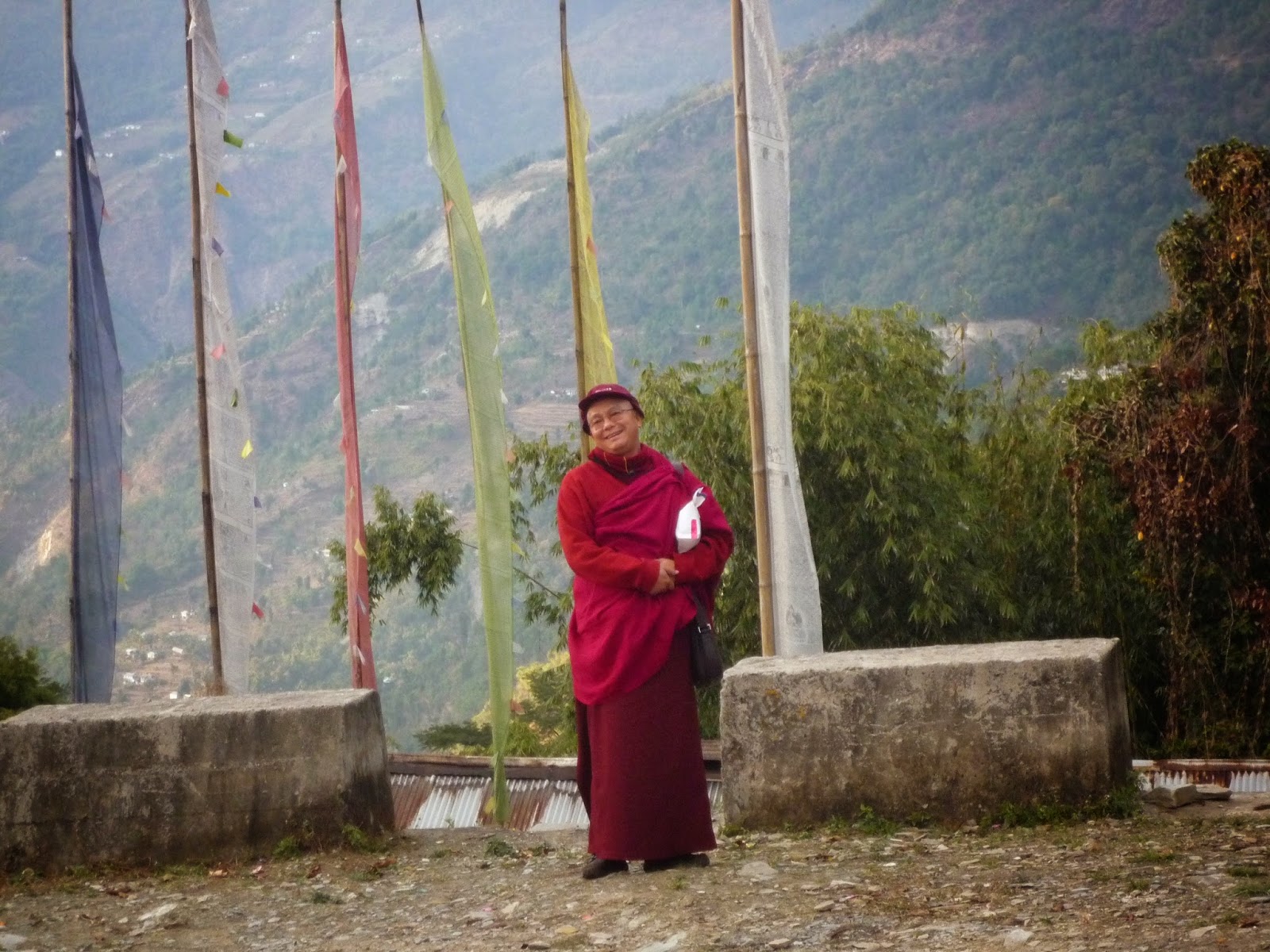
Spotted at the Ngudrup Guest House breakfast counter in Boudnath, Nepal during the recent festivities surrounding Khenpo Tsultrim Gyamtso’s 80th birthday! More photos in our next installment....

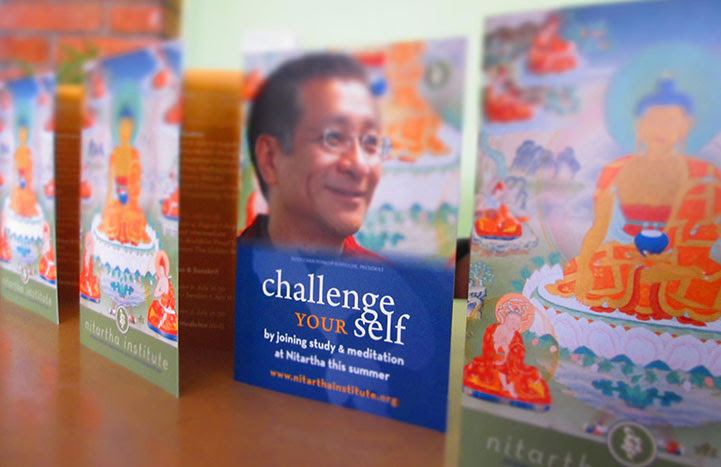
Challenge Your Self Image

Programs

Science of Language Image

Science of Language: Tibetan and Sanskrit. This summer you can now take a month-long immersive Tibetan course emphasizing colloquial Tibetan. If you have some experience with Tibetan you can take a two-week program emphasizing literary Tibetan. And if you would like to begin learning Sanskrit, you can sign up for one of our two-week courses by clicking here.


Science of Creativity Image

Science of Creativity: Art. Last summer Nitartha launched its Science of Creativity Track with great success. Due to demand, we are offering it again this summer and with Ponlop Rinpoche’s request we are also adding a new course on the eight great Bodhisattvas as depicted in Asian art. Part of the mission of Nitartha International, of which the Institute is an expression, is to preserve and offer Tibetan Buddhist educational systems for the benefit of modern minds. Due to this, the art track at Nitartha uses the frameworks of valid cognition and Karma Gadri style thangka painting to explore and express creativity. It offers both hands on and art study classes. If you would like to explore the Science of Creativity, you can sign up for one or more of our 9-day courses by clicking here. If you have any questions about the Science of Creativity track, email Stephanie atsjohnston@nalandabodhi.org.


Mahamudra Intensives Image

Mahamudra Intensives: By now most people have heard the great news that Dzogchen Ponlop Rinpoche and Acharya Lama Tenpa Gyaltsen will be offering Mahamudra Intensives for anyone at Nitartha this summer. The first two intensives are sequential, but those who can only come to session 2 will be able to make-up the teachings for session 1 before and during attendance of Session 2. Sessions 1 and 2 are being lead by both Ponlop Rinpoche and Acharya-la. Session 3 will be led by Acharya-la only and is open to anyone who attends Session 1 and/or 2 and people already practicing Mahamudra under the guidance of a recognized lineage holder. Session 1 is almost full and Session 2 is filling fast. To sign up now, click here.
         
Events: Petsam
Petsam—what’s that? Petsam is an anglicized Tibetan term for a retreat
that focusses on the critical review of texts. Dzogchen Ponlop Rinpoche
will be joining Nitartha translators and senior faculty this summer for our
first ever petsam. This seven-day event will take place before the Summer Institute and will focus on reviewing core texts used for Nitartha’s Foundation,Intermediate, and Advanced curriculums, which themselves are translated and derived from the traditional texts used in Kagyu and Nyingma shedras. For detailed information on curriculum, please click here. For more information on publications, please click here.

Chris Stagg Image
People: Our Newest Translator, Christopher Stagg
Better known as Chris Stagg, Nitartha’s newest translator debuted last summer translating for Acharya Lama Tenpa Gyaltsen’s course on the Madhyantavibhaga. He is currently expanding his translation skills through the study of Chinese, but will be joining us again this summer as a Nitartha translator. His first book will be available soon (stay tuned). It’s called “The Excellent Vase of Great Nectar: The Union of Pith Instructions and an Explanatory Commentary on The Thirty-Seven Practices of a Bodhisattva”, Root Text by Gyalse Ngulchu Thogme with commentary by Dzatrül Ngawang Tendzin Norbu, and was translated under the supervision of Dzogchen Ponlop Rinpoche.
 
 
Social Networking and Nitartha
Debate Club: Are you a Nitartha student who misses debating? Join in our debate club by emailing: dleberlein@msn.com.
NAFS: Are you Nitartha Alumni or a current student who wants to keep in touch with other alumni? Join our Facebook group: Nitartha Alumni Foundation.
FON: Would you like to help out Nitartha in some small way by volunteering or giving a small monthly donation? If so, please join Friends of Nitartha by clicking here.
Anyone want to start a We Chat group? Please contactnitartha.marketing@gmail.com.
 
 
MORE NI NEWS, REPORTS, TIDBITS & HISTORY COMING SOON

el MV Lama Drugbyu va mejorando poco a poco

El  MV Lama Drugbyu Tempa ( director espiritual de Dhag Shang Kagyu ) ha salido de la unidad
de cuidados intensivos, tras varios dias en ella, su salud va mejorando poco a poco, sin prisas pero sin pausas, quiero expresar a nivel particular  " LAS GRACIAS ", tanto al equipo medico como al de enfermería, asi como a cualquier persona que ha aportado un buen pensamiento una buena acción o
ha estado recitando Tara, o cualquier otro mantra que haya podido ayudar a la mejoría del Lama.

GRACIAS, GRACIAS, GRACIAS, GRACIAS

Visita de S.S. Karmapa en Alemania

Si no lo puedes ver correctamente
Accede con tu navegador.
Kagyu Samye Dzong Barcelona
Visita de S.S. Karmapa en Alemania
del 28 de mayo al 08 de junio de 2014
Es un acontecimiento histórico para toda Europa. Hace más de 30 años que la Sangha Karma Kamtsang espera el regreso del Karmapa. Contribuyamos todos a hacer de este acontecimiento un gran y exitoso festival para el beneficio de todos los seres.
A continuación, encontraréis un esquema provisional de la visita propuesta europea de 2014.
La reserva de entradas y alojamiento pronto se publicará enwww.kamalashila.de

Programa Kamalashila Institut®

28. Mayo11:00 - Conferencia de prensa: Tibethaus Frankfurt am Main
 16: 00 - Recepción de Karmapa en el Instituto Kamalashila
29. Mayo09:00 - Inauguración de una Stupa
 10:30 - Iniciación del "Budda de la Sanación"
 14:00 - Enseñanza sobre el Ngöndro Corto, parte 1
 19:00 - Charla: "Sabiduría y compasión, la base común de todas las religiones"
30. Mayo09:00 - Enseñanza sobre el Ngöndro Corto, parte 2
 14:00 - Enseñanza sobre el Yoga del Guru
31. Mayo09:00 - Enseñanza sobre "La Plegaria al linaje del mahamudra", parte 1
 15:00 - Iniciación "Los 84 mahasiddhas"
01. Junio09:00 - Enseñanza sobre "La Plegaria al linaje del mahamudra", parte 2
 15:00 - Iniciación de "Los 84 mahasiddhas"
02. JunioPartida del Kamalashila Institut®

Programa en Berlín

05. Junio19:30 - Conferencia: "Sabiduría antigua para el mundo moderno. Consejos del corazón para tener una vida con sentido"
06. Junio14:00 - Visita al centro Bodhicharya de Berlín
 19:30 - Conferencia: "El budismo y el medio ambiente: Una vida en armonía con nuestra Tierra"
07. Junio14:30 - Conferencia: "Cambiar el mundo desde dentro – Amor y compasión para un mundo globalizado"
 19:30 - Actividad cultural: 'Arte y artistas – Encuentro con el Karmapa'
08. Junio10:00 - Iniciación: Karma Pakshi
 14:00 - Los jóvenes se reúnen con el Karmapa: 'El futuro es ahora – La juventud actual es la esperanza de un mañana mejor'
1. FUENTES FIABLES DE INFORMACIÓN sobre la visita :
http://www.kamalashila.de/ http://karmapafoundation.eu/ 
Dentro de unos días, el Instituto Kamalashila iniciará una nueva página web
dedicada a la visita. Si tienes alguna pregunta concreta sobre las condiciones locales que no se ven en las páginas web, dirígete directamente a Tobias Röder
geschaeftsfuehrung@kamalashila.de
2. ALOJAMIENTO: es responsabilidad personal de los participantes y se recomienda encontrar y reservar alojamiento óptimo (http: www.booking.com). Cerca de Langenfeld, el 61 % de las camas están reservadas, pero aún quedan en 67 hoteles. Debe reservarse lo antes posible.
3. La organización de Alemania solicita un cálculo aproximado del número de participantes, saber de qué país se procede y si se asistirá al programa de actividades de S.S. Karmapa en Kamalashila o en Berlín o a ambos. Esta información es importante para que los organizadores puedan calibrar los actos y preparar el lugar adecuado.
Si vas a asistir a uno de los programas o a los dos, te rogamos nos indiques a cuál escribiendo a barcelona@samye.es con la mayor brevedad.

La próxima visita incurrirá en costos importantes que no se podrán cubrir solo con la venta de entradas. Por consiguiente, la KFE depende de las donaciones.
¡Únete a nosotros para apoyar la primera visita histórica de S.S. el XVII Karmapa a Europa! Cualquier cantidad será bien recibida.
¡Gracias!

Información para transferencia bancaria

CTA:Tibet.-Buddh.Rel.Gemeinschaft
REF:'Visit Karmapa 2014'
IBAN:DE73 3707 0024 0783 4666 27
BIC:DEUTDEDBKOE

También puedes hacer el donativo por paypal en esta página:http://karmapafoundation.eu/donate/

martes, 18 de marzo de 2014

Hearing on the Persecution of Religious and Indigenous Communities in Vietnam

 
Tom Lantos Human Rights Commission
 
Hearing on the Persecution of Religious and Indigenous Communities in Vietnam
 
Wednesday, March 26, 2014
2:00 PM - 4:00 PM
HVC 210
 

Please join the Tom Lantos Human Rights Commission for a hearing on the persecution of religious and indigenous communities in Vietnam.

In the 1970s, following the emergence of the Socialist Republic of Vietnam under the Communist Party of Vietnam, the government disbanded the leadership of all independent-minded religious organizations; and the country’s Communist cadres quickly appointed new leaders of these organizations.  Further, as stipulated by its 2004 Ordinance on Religion and Belief, Vietnam’s government requires all religious organizations to be registered and their activities pre-approved.  Organizations that refuse to register or whose registration applications have been denied risk having their activities deemed illegal and expose their leaders and followers to arrest and harassment.  More recently, the 2013 Government Decree 92/2012/ND-CP banned all religious, cultural and traditional activities – even when conducted in private homes – unless they are registered, pre-approved, or officiated by a government entity.
 
In addition, the government’s policies of land appropriation, population displacement and prohibition of indigenous languages in schools have altered the identities of its indigenous peoples and weakened their cultural heritage.  Today, there is virtually no authentic representation of indigenous peoples in the government of Vietnam.

This hearing will focus on Vietnam’s persecution and repression of faith and indigenous communities, and also examine the U.S. government’s response to these human rights abuses.  Notably, for the first time, the Commission hearing will feature prominent activists testifying directly from Vietnam.  These brave individuals will provide first-hand accounts of the abuses suffered by their respective communities.


Witnesses to testify:
 
Panel I:
  • U.S. Commission on International Religious Freedom (Commissioner TBA)
 
Panel II:
·         Father Phan Van Loi, Editor-in-Chief of Freedom of Speech and Co-Founder of the Association of Former Vietnamese Prisoners of Conscience
·         Sub-dignitary Nguyen Bach Phung, Clergy member of an independent Cao Dai Sect
·         Attorney Yunie Hong, Director of Policy Advocacy, Hmong National Development
·         Mr. Rong Nay, Executive Director, Montagnard Human Rights Organization
 
*Witness list subject to change
 
Note: The hearing will be streaming live at (Web link TBA)
 
For any questions, please contact the Tom Lantos Human Rights Commission at 202-225-3599 or tlhrc@mail.house.gov.
 
 
James P. McGovern                                        Frank R. Wolf
Co-Chair, TLHRC                         
                 Co-Chair, TLHRC

por la recuperacion de Lama Drugbyu


jueves, 27 de febrero de 2014

FELIZ LOSAR PARA TODOS/AS


Discussion on Anti-Muslim Violence

Burma Crisis Roundtable: A Discussion on Anti-Muslim Violence

DeaTso pema Ling
Join us on Thursday, February 27 for an urgent discussion on anti-Muslim violence in Burma. This is an opportunity to hear from panelists from US Campaign for Burma, Burma Task Force USA, Physicians for Human Rights, and faith-based organizations.
Event Details
When: Thursday, February 27 at 7-9 PM
Where: All Souls Church, 1157 Lexington Avenue (near 80th St), New York, New York, 10075
Event Panelists
Holly Atkinson, Former President of Physicians for Human Rights
Rachel Wagley, Policy Director of US Campaign for Burma
Bruce Knotts, Director of Unitarian Universalist United Nations Office
Nay San Oo, Free Rohingya Campaign
Shaik Ubaid, Muslim Peace Coalition, Co-founder of Burma Task Force
Alex Caring-Lobel, Trycicle Foundation
This event is sponsored by Burma Task Force USA and the Unitarian Universalist United Nations Office, and hosted by the Social Justice Committee of All Souls Church.

The Three Practices of Morality, Meditation and Wisdom


Tergar Learning Community
 

 The Three Practices of Morality, Meditation and Wisdom 
Mingyur Rinpoche's Monthly Teaching on Tergar Learning

In this short teaching Mingyur Rinpoche talks about the three practices: morality, meditation and wisdom. Rinpoche explains that the first practice, morality, means we should behave ethically. Through meditation, the second practice, we can achieve enlightenment. And we can see the real nature of reality through the third practice, wisdom.


Not a member yet? Register here, it's free...and easy!