 | |||
| Del 17 al 19 : Khenpo Chöying, del Monasterio de Sonada, India, dará Enseñanzas sobre el texto de Nagarjuna Uma Tsaua Sherab (la sabiduría fundamental del camino medio)  nació en 1964 en el Tíbet. Empezó sus primeros estudios a la edad de 8 años y a la edad de 20 años, tomó votos de monje plenamente ordenado. En 1985, se exilió a la India dónde continuó durante 9 años sus estudios en la Universidad Monástica de Dzongsar. Completó el estudio de los 18 textos mayores que componen los cursos universitarios de los estudios búdicos, obteniendo el título de de Khenpo. Durante 6 años, enseñó en la Universidad Dzongsar, dónde S.S. Sakya Trinzin le confirió iniciaciones, transmisiones orales y explicaciones sobre las cuatro clases del Tantras más elevado. Khenpo Chöying es actualmente Director de estudios en el monasterio de Sonada, en la India. "Uma Tsaua Sherab " es el texto clave de la escuela Madhyamaka de Budismo y seguramente el trabajo más famoso de Nagarjuna, el gran filósofo indio y Maestro del siglo II AC. Escrito en veintisiete capítulos, en un estilo conciso y con una lógica rigurosa, este texto examina todas nuestras certezas sobre la realidad fenoménica y nos presenta imperiosamente el concepto de producción interdependiente que es la esencia del Camino Medio. | |||
| |||
| Del 23 al 26 : Retiro con Ari Goldfied "El Deleite de la Sabiduría": Entrenamiento en las Calidades Innatas de Cuerpo y Mente Nuestra naturaleza verdadera es relajada y confidente, alegre y compasiva, clara y sabia. Las enseñanzas más profundas del Budismo nos conectan con nuestra naturaleza esencial, de modo que podamos manifestar sus cualidades innatas. Este retiro presentará estas enseñanzas y prácticas progresivamente, de modo que se vayan desarrollando la confianza y la experiencia directa. Habrá sesiones de explicación, de meditación, y de preguntas y respuestas. En este retiro, nos entrenaremos en estas prácticas esenciales de la siguiente forma : Etapas Progresivas de Meditación sobre la Realidad Esencial Enseñanzas del Budismo sobre los, cada vez más sutiles y profundos niveles de meditación en la naturaleza verdadera de la realidad. Teniendo como soporte el nuevo libro de Khenpo Tsültrim Gyamtso Rinpoche "las Estrellas de Sabiduría". Lujong Lujong son una serie de ejercicios de yoga tibetanos, beneficiosos para todos los practicantes, sea cual sea su estado de salud, que Khenpo Rinpoche desarrolló basándose en su experiencia con prácticas tradicionales avanzadas de yoga. Los ejercicios de Lujong nos ayudan a realizar y manifestar la naturaleza verdadera de nuestro cuerpo y mente. Mejoran la salud del cuerpo físico y sutil. Al mismo tiempo, nos ayudan a transformar el dolor físico y la enfermedad. El resultado es la flexibilidad física y mental, el bienestar, y la alegría.
Ari es profesor de filosofía budista y traductor en el linaje tibetano Karma Kagyu con la bendición del cabeza de linaje, H.H. Karmapa Ogyen Trinley Dorje. Su principal maestro es Khenpo Tsultrim Gyamtso Rinpoche (maestro a su vez de H.H. Karmapa) . El sigue la tradición de Khenpo Rinpoche de las instrucciones profundas y poderosas que incluyen la filosofía, el ejercicio de meditación y de yoga. Ari vive en San Francisco, EE.UU., y da clases tanto local como internacionalmente. | |||

jueves, 16 de junio de 2011
actividades Dag Shang Kagyu


MUY IMPORTANTE
 | |||||||||||||||||||||||||||||
|


support Tibet
Support Tibet | Get Updates | Follow Us 

The Tibet Update eNewsletter is a bimonthly summary of news and governmental actions related to Tibet. Past issues in PDF format are located at http://www.savetibet.org/media-center/tibet-weekly-updates/.
DALAI LAMA:
The Dalai Lama in Australia
On June 14, His Holiness the Dalai Lama visited the Parliament in Canberra for a series of meetings with members from all of Australia’s major political parties. His Holiness addressed a parliamentary reception attended by over 80 MPs, Senators, and Advisers. Read More >>
U.S. CONGRESS:
House Foreign Affairs Committee Hearing on Tibet, Burma and North Korea
On June 2, 2011, the U.S. House of Representative’s Foreign Affairs Committee convened a hearing on “Religious Freedom, Democracy and Human Rights in Asia: Status of Implementation of the Tibetan Policy Act of 2002, Block Burmese JADE act, and North Korean Human Right Act.” ICT’s Chairman Richard Gere testified on Tibet – his full testimony is available here.


INSIDE TIBET:
ICT Report: Fears for future of Kirti monastery; UN seeks answers
According to new information received by ICT, paramilitary occupation of Kirti monastery continues and monks have been leaving Kirti monastery in recent months due to the climate of fear created by the presence of troops blockading the monastery, the risks of disappearance, torture and detention. Read More >>
 ICT Report: Official celebrations marking the 60th anniversary of the “Peaceful Liberation of Tibet”: Attendees and Absentees
Reports in China’s official media indicate that no one from the central government attended important celebrations held in Lhasa on May 23 to mark the 60th anniversary of the signing of the “17-point Agreement,” a key treaty between the Chinese and Tibetan governments routinely cited by the Chinese authorities as the main legal and moral cornerstone of Beijing’s authority in Tibet. Read More >>
New video of Tibet protests
A new video of a group of Tibetan monks carrying out a peaceful protest in eastern Tibet was released by the Central Tibetan Administration on June 8, 2011. The video shows protests that were carried out on May 8, 2010 in Nyagrong, Kham Province, an area that has a huge population of Chinese immigrants. Read More >>
Freedom House includes Tibet among countries suffering worst human rights abuses
Freedom House, an independent U.S.-based watchdog organization that supports the expansion of freedom around the world, released “Worst of the Worst 2011: The World’s Most Repressive Societies,” its annual report identifying the world’s most flagrant human rights abusers, at a June 1 press conference during the 17th session of the UN Human Rights Council in Geneva. Read More >>
 ICT Report: Crackdown in Ngaba: monks detained for giving wrong answers in ‘patriotic education’
A climate of fear continues in the Ngaba (Chinese: Aba) area in Sichuan province. Two monks from Kirti living in India said that special police forces are maintaining their blockade of Kirti monastery and holding ‘patriotic education’ meetings where, “they ask lots of questions, and when the monks cannot give the answers that the officials want to hear on many issues, it seems that they are arresting them.” Read More >>
TIBET IN EXILE:
ICT Report: Tibetan exiles set a democratic course as Dalai Lama devolves formal political responsibilities to elected leadership
On May 29, His Holiness the Dalai Lama ratified amendments to the governing Charter presented to him by the Tibetan Parliament in Exile that devolve his political powers to democratically elected leadership headed by a chief minister or Kalon Tripa. Read More >>
An Open Door for Tibet?
In an Op-ed, published in the Wall Street Journal, by ICT President, Mary Beth Markey writes, “Every day, Tibetans risk their lives to speak up for the Dalai Lama’s return and against Chinese policies that constrain their free access to their spiritual leader. But Beijing so far hasn’t budged … So, it’s interesting that a Communist Party official said last week that the door is open for the Dalai Lama to go home anytime he likes subject to certain conditions, of course.” The full article can be read on SaveTibet.org.
NEPAL:
ICT Report: Nepal’s human rights review; concern for Tibetan Refugee Community
On Tuesday June 7, 2011 the 17th session of the United Nations Human Rights Council met in Geneva for the adoption of Nepal’s final report on its Universal Periodic Review (UPR). International delegates raised concerns over Nepal’s treatment of its Tibetan refugee population and the growing influence China has in the matter. Read More >>
FROM THE ICT BLOG:
We have recently redesigned our blog and will continue building to provide you with the best possible content and experience. We invite you to join the conversation and to stay updated by subscribing to the RSS feed.
Visit us today at: ICT Blog: Ideas, Advocacy and Dialog on Tibet
Sense of Congress on Tibet - June 6, 2011
BECOME A FRIEND OF TIBET:
ICT relies on the consistent support of a special group of supporters called Friends of Tibet. These automatic monthly gifts provide a steady, reliable source of income and ensure we will have the funds when we need to respond to emergencies and unexpected opportunities as they arise. Check here if you are interested in becoming a Friend of Tibet or would just like to receive more information. Tashi Delek!
The Tibet Update eNewsletter is a bimonthly summary of news and governmental actions related to Tibet. Past issues in PDF format are located at http://www.savetibet.org/media-center/tibet-weekly-updates/.
DALAI LAMA:
The Dalai Lama in Australia
On June 14, His Holiness the Dalai Lama visited the Parliament in Canberra for a series of meetings with members from all of Australia’s major political parties. His Holiness addressed a parliamentary reception attended by over 80 MPs, Senators, and Advisers. Read More >>
U.S. CONGRESS:
House Foreign Affairs Committee Hearing on Tibet, Burma and North Korea
On June 2, 2011, the U.S. House of Representative’s Foreign Affairs Committee convened a hearing on “Religious Freedom, Democracy and Human Rights in Asia: Status of Implementation of the Tibetan Policy Act of 2002, Block Burmese JADE act, and North Korean Human Right Act.” ICT’s Chairman Richard Gere testified on Tibet – his full testimony is available here.
INSIDE TIBET:
ICT Report: Fears for future of Kirti monastery; UN seeks answers
According to new information received by ICT, paramilitary occupation of Kirti monastery continues and monks have been leaving Kirti monastery in recent months due to the climate of fear created by the presence of troops blockading the monastery, the risks of disappearance, torture and detention. Read More >>
ICT Report: Official celebrations marking the 60th anniversary of the “Peaceful Liberation of Tibet”: Attendees and AbsenteesReports in China’s official media indicate that no one from the central government attended important celebrations held in Lhasa on May 23 to mark the 60th anniversary of the signing of the “17-point Agreement,” a key treaty between the Chinese and Tibetan governments routinely cited by the Chinese authorities as the main legal and moral cornerstone of Beijing’s authority in Tibet. Read More >>
New video of Tibet protests
A new video of a group of Tibetan monks carrying out a peaceful protest in eastern Tibet was released by the Central Tibetan Administration on June 8, 2011. The video shows protests that were carried out on May 8, 2010 in Nyagrong, Kham Province, an area that has a huge population of Chinese immigrants. Read More >>
Freedom House includes Tibet among countries suffering worst human rights abuses
Freedom House, an independent U.S.-based watchdog organization that supports the expansion of freedom around the world, released “Worst of the Worst 2011: The World’s Most Repressive Societies,” its annual report identifying the world’s most flagrant human rights abusers, at a June 1 press conference during the 17th session of the UN Human Rights Council in Geneva. Read More >>
ICT Report: Crackdown in Ngaba: monks detained for giving wrong answers in ‘patriotic education’A climate of fear continues in the Ngaba (Chinese: Aba) area in Sichuan province. Two monks from Kirti living in India said that special police forces are maintaining their blockade of Kirti monastery and holding ‘patriotic education’ meetings where, “they ask lots of questions, and when the monks cannot give the answers that the officials want to hear on many issues, it seems that they are arresting them.” Read More >>
TIBET IN EXILE:
ICT Report: Tibetan exiles set a democratic course as Dalai Lama devolves formal political responsibilities to elected leadership
On May 29, His Holiness the Dalai Lama ratified amendments to the governing Charter presented to him by the Tibetan Parliament in Exile that devolve his political powers to democratically elected leadership headed by a chief minister or Kalon Tripa. Read More >>
An Open Door for Tibet?
In an Op-ed, published in the Wall Street Journal, by ICT President, Mary Beth Markey writes, “Every day, Tibetans risk their lives to speak up for the Dalai Lama’s return and against Chinese policies that constrain their free access to their spiritual leader. But Beijing so far hasn’t budged … So, it’s interesting that a Communist Party official said last week that the door is open for the Dalai Lama to go home anytime he likes subject to certain conditions, of course.” The full article can be read on SaveTibet.org.
NEPAL:
ICT Report: Nepal’s human rights review; concern for Tibetan Refugee Community
On Tuesday June 7, 2011 the 17th session of the United Nations Human Rights Council met in Geneva for the adoption of Nepal’s final report on its Universal Periodic Review (UPR). International delegates raised concerns over Nepal’s treatment of its Tibetan refugee population and the growing influence China has in the matter. Read More >>
FROM THE ICT BLOG:
We have recently redesigned our blog and will continue building to provide you with the best possible content and experience. We invite you to join the conversation and to stay updated by subscribing to the RSS feed.
Visit us today at: ICT Blog: Ideas, Advocacy and Dialog on Tibet
Sense of Congress on Tibet - June 6, 2011
BECOME A FRIEND OF TIBET:
ICT relies on the consistent support of a special group of supporters called Friends of Tibet. These automatic monthly gifts provide a steady, reliable source of income and ensure we will have the funds when we need to respond to emergencies and unexpected opportunities as they arise. Check here if you are interested in becoming a Friend of Tibet or would just like to receive more information. Tashi Delek!
miércoles, 15 de junio de 2011
Today we celebrate Saka Dawa
 Dear Tso Pema, Today we celebrate Saka Dawa, the most holy day of the year honoring the birth, enlightenment and parinirvana of Shakyamuni Buddha. We invite you once again to join the international FPMT community as we spend this especially auspicious day in service to our precious spiritual director, Lama Zopa Rinpoche, as part of our annual Work a Day for Rinpoche event. Lama Zopa Rinpoche’s vision and capacity for serving others is endless. If education is the heart of FPMT, our charitable projects and centers, projects, and services are our many arms, reaching far and wide to offer service and guidance wherever Rinpoche identifies a need. To actualize our programs we need your support. Our goal is to raise $100,000 in 2011. Here’s how you can help:
Thank you for joining the international FPMT community on this special holy day. Together we’re making a difference and helping actualize Lama Zopa Rinpoche’s vision for a wiser, more compassionate world.   | ||
|

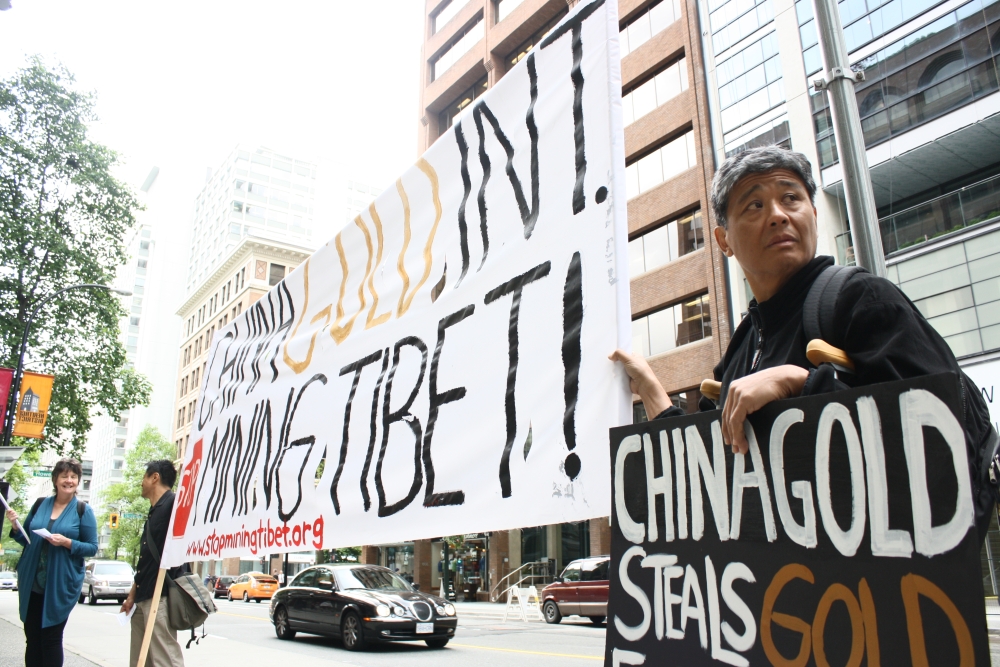
STOP MINING TIBET
mostrar detalles 21:01 (Hace 1 hora) |
|


actividades en Dag Shang Kagyu
| Del 17 al 19 : Khenpo Chöying, del Monasterio de Sonada, India, dará Enseñanzas sobre el texto de Nagarjuna Uma Tsaua Sherab (la sabiduría fundamental del camino medio) Khenpo Chöying nació en 1964 en el Tíbet. Empezó sus primeros estudios a la edad de 8 años y a la edad de 20 años, tomó votos de monje plenamente ordenado. En 1985, se exilió a la India dónde continuó durante 9 años sus estudios en la Universidad Monástica de Dzongsar. Completó el estudio de los 18 textos mayores que componen los cursos universitarios de los estudios búdicos, obteniendo el título de de Khenpo. Durante 6 años, enseñó en la Universidad Dzongsar, dónde S.S. Sakya Trinzin le confirió iniciaciones, transmisiones orales y explicaciones sobre las cuatro clases del Tantras más elevado. Khenpo Chöying es actualmente Director de estudios en el monasterio de Sonada, en la India."Uma Tsaua Sherab " es el texto clave de la escuela Madhyamaka de Budismo y seguramente el trabajo más famoso de Nagarjuna, el gran filósofo indio y Maestro del siglo II AC. Escrito en veintisiete capítulos, en un estilo conciso y con una lógica rigurosa, este texto examina todas nuestras certezas sobre la realidad fenoménica y nos presenta imperiosamente el concepto de producción interdependiente que es la esencia del Camino Medio. | ||
| ||
| Del 23 al 26 : Retiro con Ari Goldfied "El Deleite de la Sabiduría": Entrenamiento en las Calidades Innatas de Cuerpo y Mente Nuestra naturaleza verdadera es relajada y confidente, alegre y compasiva, clara y sabia. Las enseñanzas más profundas del Budismo nos conectan con nuestra naturaleza esencial, de modo que podamos manifestar sus cualidades innatas. Este retiro presentará estas enseñanzas y prácticas progresivamente, de modo que se vayan desarrollando la confianza y la experiencia directa. Habrá sesiones de explicación, de meditación, y de preguntas y respuestas. En este retiro, nos entrenaremos en estas prácticas esenciales de la siguiente forma : Etapas Progresivas de Meditación sobre la Realidad Esencial Enseñanzas del Budismo sobre los, cada vez más sutiles y profundos niveles de meditación en la naturaleza verdadera de la realidad. Teniendo como soporte el nuevo libro de Khenpo Tsültrim Gyamtso Rinpoche "las Estrellas de Sabiduría". Lujong Lujong son una serie de ejercicios de yoga tibetanos, beneficiosos para todos los practicantes, sea cual sea su estado de salud, que Khenpo Rinpoche desarrolló basándose en su experiencia con prácticas tradicionales avanzadas de yoga. Los ejercicios de Lujong nos ayudan a realizar y manifestar la naturaleza verdadera de nuestro cuerpo y mente. Mejoran la salud del cuerpo físico y sutil. Al mismo tiempo, nos ayudan a transformar el dolor físico y la enfermedad. El resultado es la flexibilidad física y mental, el bienestar, y la alegría.
Ari es profesor de filosofía budista y traductor en el linaje tibetano Karma Kagyu con la bendición del cabeza de linaje, H.H. Karmapa Ogyen Trinley Dorje. Su principal maestro es Khenpo Tsultrim Gyamtso Rinpoche (maestro a su vez de H.H. Karmapa) . El sigue la tradición de Khenpo Rinpoche de las instrucciones profundas y poderosas que incluyen la filosofía, el ejercicio de meditación y de yoga. Ari vive en San Francisco, EE.UU., y da clases tanto local como internacionalmente. |
martes, 14 de junio de 2011
Le Festival pour la Paix
| |||||||||||||||||||||||
| |||||||||||||||||||||||

 Une date à retenir : le week-end du 18 juin
Suscribirse a:
Entradas (Atom)